Madison County Dog Registration Information
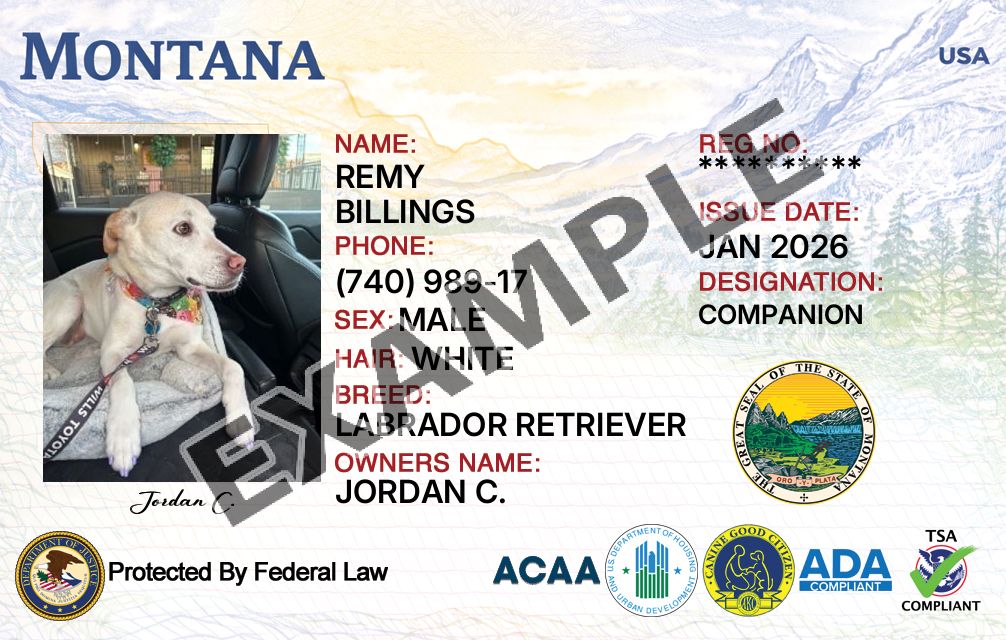
Service Dogs and Emotional Support Animals in Madison, Montana
If you’re searching where do I register my dog in Madison County, Montana for my service dog or emotional support dog, the key detail is that “registration” can mean different things. A dog license in Madison County, Montana (often tied to rabies control and local ordinances) is usually handled by a local government office—often a town clerk or law enforcement/animal control contact—while service dog status and emotional support animal (ESA) status are legal/medical or housing-related classifications, not county “registrations.”
This page helps you identify where to register a dog in Madison County, Montana (meaning: where to ask about a license tag, rabies documentation expectations, and local enforcement), and how that differs from service dog and ESA rules.
- Dog licensing is a local requirement (often city/town-based) and may require rabies vaccination proof.
- Service dogs are not required to be registered or certified by a government office to be recognized for public access under the ADA.
- Emotional support animals (ESAs) generally relate to housing accommodations under federal fair housing guidance—not public access and not a county license category.
Where to Register or License Your Dog in Madison County, Montana
Because licensing and rabies enforcement are often handled locally, start by contacting the office that covers where you live (town limits vs. unincorporated county). The offices below are official examples within Madison County, Montana that residents commonly contact for local government services, public health guidance, and enforcement questions (including animal-related matters).
Example Official Offices (Madison County, Montana)
| Office | Address | Phone | Hours | |
|---|---|---|---|---|
|
Madison County Sheriff’s Office
Non-emergency contact for enforcement questions and local direction
|
5 Placer Loop
Virginia City, MT 59755
|
406-843-5301 | Not listed | Not listed |
|
Madison County Public Health
Rabies exposure guidance, animal bite reporting, public health coordination
|
401 S Main Street
Sheridan, MT 59749
|
406-204-0712 | mcphd@madisoncountymt.gov | Not listed |
|
Town of Ennis — Town Hall (Town Clerk)
Example town office where a municipal dog license may be administered
|
328 West Main Street
Ennis, MT 59729
|
406-682-4287 | Not listed | Mon–Fri 9:00 am–4:00 pm (closed 12:00 pm–1:00 pm) |
|
Town of Virginia City — Town Office
Example town office contact (town-level questions)
|
Address not listed | 406-843-5321 | townofvc@3rivers.net | Not listed |
|
Madison County Clerk & Recorder
General county office (may redirect you to the right department)
|
103 W Wallace St, First Floor
Virginia City, MT 59755
|
406-898-4406 | Not listed | Not listed |
Overview of Dog Licensing in Madison County, Montana
What a dog license usually is (and what it isn’t)
A dog license is a local registration that helps a city/town or county track dog ownership, support animal control activities, and enforce certain health and nuisance rules. In many places, licensing is closely tied to proof that a dog is currently vaccinated against rabies. A license typically results in a tag (with a number and year) that is meant to be attached to your dog’s collar or harness.
A dog license is not the same thing as “registering” a dog as a service dog or ESA. Those are separate legal categories that relate to disability access and housing rules (covered below).
Rabies vaccination and local enforcement reality
Montana does not have a single universal statewide rule requiring every owned dog to be vaccinated for rabies in all circumstances, but state agencies recommend vaccination and provide rabies guidance for reporting and quarantines. In practice, local governments can require rabies documentation as part of a town dog license process and may enforce bite/exposure reporting through public health.
Bottom line: even when someone’s main question is “where do I register my dog,” the answer often involves two tracks—(1) local dog licensing and tags, and (2) public health processes if there is a bite/exposure concern.
How Dog Licensing Works Locally in Madison County, Montana
Step 1: Identify whether you’re inside a town/city limit
Dog licensing is often handled at the municipal level. That means the rules can differ depending on whether your home is inside a town (such as Ennis or Virginia City) versus in an unincorporated area of Madison County. If you live in town limits, a town clerk or town hall may be the right place to start.
Step 2: Ask what ordinance applies and what documents are required
Local ordinances commonly require a license for dogs over a certain age and may require that your application include a current rabies certificate issued by a licensed veterinarian. For example, municipal code language may require rabies documentation to be submitted with a license application and may provide for a tag and a licensing year.
When you call the local office, ask these questions:
- Do I need a dog license in Madison County, Montana for my address, or is it handled by my town?
- What age triggers licensing (for example, 6 months)?
- Is rabies vaccination proof required to issue a license tag?
- Do you require renewal every year, and what is the licensing period?
- Are there different fees for spayed/neutered dogs (if applicable), and are there any exemptions?
Step 3: Understand “animal control” in a rural county context
In many Montana counties, animal control functions may be carried out by law enforcement or by designated local officials rather than a single centralized “animal services” department. That’s why the Madison County Sheriff’s Office is a practical first call when you’re not sure where to register a dog in Madison County, Montana or who is responsible for enforcement in your part of the county.
Step 4: Know what happens after a bite or rabies exposure concern
If your dog bites someone, or someone is bitten by a dog, public health reporting and quarantine guidance can apply. Madison County Public Health provides animal bite reporting resources and can guide next steps, including what documentation may be requested (such as rabies vaccination information) and what monitoring/quarantine rules apply to the situation.
Service Dog Laws in Madison County, Montana
Service dogs are not “registered” by the county for ADA public access
If you’re trying to register your dog as a service dog, the most important SEO-answer is also the most practical one: there is no county office where you must register a service dog for public access rights under the ADA. The ADA does not require service animals to be certified or registered, and a business or public entity generally cannot require “registration papers” as a condition of entry.
What you can still be required to do locally
Even though a service dog doesn’t need a special ADA “registration,” it can still be subject to local dog licensing requirements that apply to all dogs in the jurisdiction (for example, a municipal license tag requirement). In other words:
- Service dog legal status (ADA access) and a dog license (local tag) are separate.
- Your town may still require a dog license tag and rabies documentation, even if the dog is a service dog.
- Local rules generally can’t be used to deny ADA access if the dog meets the service dog definition and is under control, but licensing can still be required as a general animal control measure.
Avoid “service dog registry” sales pitches
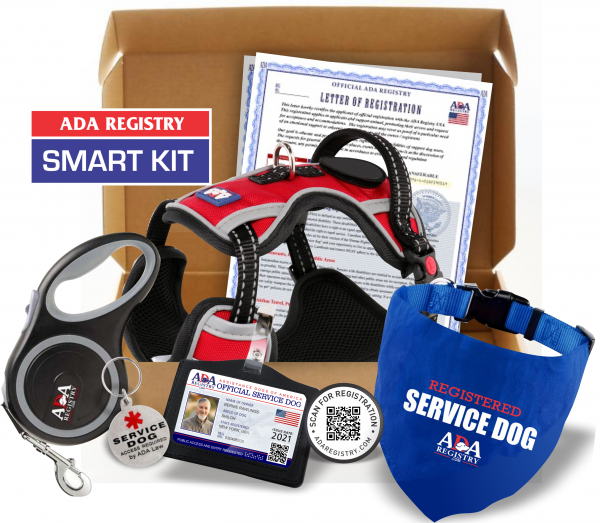
Many websites sell “registrations,” IDs, or certificates. Those are not the same as legal service dog status. If your goal is to comply with local requirements, focus on (1) local licensing/tag rules and (2) training and handling standards that keep your dog under control in public.
Emotional Support Animal Rules in Madison County, Montana
ESAs are not the same as service dogs
An emotional support animal (ESA) generally provides emotional support that alleviates one or more symptoms or effects of a disability. Unlike service dogs, ESAs do not have the same broad public access rights under the ADA. That means a store, restaurant, or other public place may allow pets only under its pet policy, and an ESA label does not automatically grant entry where pets are prohibited.
Where ESAs matter most: housing
ESAs most commonly come up in the context of housing. Federal fair housing guidance addresses “assistance animals,” which can include ESAs, and explains how a person may request a reasonable accommodation related to an assistance animal in housing with a no-pets policy, when the criteria are met.
ESA “registration” vs. local dog licensing
There typically isn’t a county “ESA registration.” If you’re asking where to register a dog in Madison County, Montana because your landlord asked for paperwork, separate the tasks:
- Local compliance: follow any local licensing/tag rules for your address (town vs. county).
- Housing accommodation: provide documentation appropriate to a housing request (as requested/allowed by housing rules), not a “county registration certificate.”
Frequently Asked Questions
Often, yes. A service dog generally does not need to be “registered” for ADA public access rights, but local dog licensing rules can still apply. Contact your town hall (if you live inside town limits) or ask the Sheriff’s Office which office handles dog licensing for your address.
Start by calling the Madison County Sheriff’s Office non-emergency number and asking which local authority handles dog licensing/rabies enforcement for your specific area. In unincorporated areas, responsibilities may differ from town-based licensing.
For ADA public access, a service dog is not required to be registered or certified by an official registry. What matters is whether the dog is individually trained to do work or perform tasks related to a disability, and whether the dog is under control and housebroken in public settings.
Requirements can be local. Many licensing programs and municipal ordinances require proof of current rabies vaccination to issue a dog license tag. If you’re within a town (for example, Ennis), ask the town clerk what documentation is required for licensing.
Contact Madison County Public Health for public health guidance and reporting related to animal bites and potential rabies exposure. You may also need to contact local law enforcement depending on the situation and location.
Licensing requirements and office locations may change. Residents should verify details with their local animal services office within Madison County, Montana.
Register A Dog In Other Montana Counties
Select your county below to get started with your dog’s ID card. Requirements and license designs may vary by county, so choose your location to see the correct options and complete your pup’s registration.
- Beaverhead County Dog Registration
- Big Horn County Dog Registration
- Blaine County Dog Registration
- Broadwater County Dog Registration
- Carbon County Dog Registration
- Carter County Dog Registration
- Cascade County Dog Registration
- Chouteau County Dog Registration
- City of Anaconda County Dog Registration
- City of Butte County Dog Registration
- Custer County Dog Registration
- Daniels County Dog Registration
- Dawson County Dog Registration
- Deer Lodge County Dog Registration
- Fallon County Dog Registration
- Fergus County Dog Registration
- Flathead County Dog Registration
- Gallatin County Dog Registration
- Garfield County Dog Registration
- Glacier County Dog Registration
- Golden Valley County Dog Registration
- Granite County Dog Registration
- Hill County Dog Registration
- Jefferson County Dog Registration
- Judith Basin County Dog Registration
- Lake County Dog Registration
- Lewis and Clark County Dog Registration
- Liberty County Dog Registration
- Lincoln County Dog Registration
- McCone County Dog Registration
- Meagher County Dog Registration
- Mineral County Dog Registration
- Missoula County Dog Registration
- Musselshell County Dog Registration
- Park County Dog Registration
- Petroleum County Dog Registration
- Phillips County Dog Registration
- Pondera County Dog Registration
- Powder River County Dog Registration
- Powell County Dog Registration
- Prairie County Dog Registration
- Ravali County Dog Registration
- Richland County Dog Registration
- Roosevelt County Dog Registration
- Rosebud County Dog Registration
- Sanders County Dog Registration
- Sheridan County Dog Registration
- Silver Bow County Dog Registration
- Stillwater County Dog Registration
- Sweet Grass County Dog Registration
- Teton County Dog Registration
- Toole County Dog Registration
- Treasure County Dog Registration
- Valley County Dog Registration
- Wheatland County Dog Registration
- Wibaux County Dog Registration
- Yellowstone County Dog Registration